
Through the Mud
The hardest class I took during my course of studies for my bachelor’s degree in English was called The History of English Language. That course wasn’t what I expected, though after I sat through the opening lecture I could see that was my fault and not the English Department’s problem.
I signed up for a course about philology, the way history has shaped the English language. What I got was a course in linguistics: phonograms, syntax, and morphology as acquired over time in English.
I scrambled to try to find an alternative course that fit my schedule and my degree requirements. I even looked into taking the course pass/no pass rather than for a grade. But there wasn’t another course to take and I needed to take this course for a letter grade to get my degree. Suddenly, I needed very much to get an A in a class I wasn’t prepared to take.
I had never studied phonetics beyond the most basic short letter sounds of the English language as a very small child. I learned spelling lists as a child by memorizing letters not sounds. I was a child of the Whole Word movement of literacy.
Our professor discussed short and long letter sounds and showed us how dictionaries marked the phonetic sounds. I would break into a cold sweat. I couldn’t hear the difference between the sounds. The short vowel sounds of E, O, and U might as well have been in Greek (actually, maybe like Hebrew, I studied Ancient Greek in college and that was easier than English linguistics).
We were meant to learn the phonetic conversion of sounds over time based on the development of the English language as it rubbed elbows with other cultures. Instead, I spent hours and hours memorizing the phonetic markings of the words we were required to study. I created index cards and carried them with me everywhere. I got an A in that course by the gift of a great facility for memorization, the same gift that had served me as a child studying whole words, and then I promised myself to steer clear of phonetics like the plague.
And then the plague happened.
At the start of Covid, I felt like I was playing whack-a-mole. I had three children on three separate screens, taking zoom calls from their teachers and trying to access online educational content. I spent all day running from room to room troubleshooting and supervising while my toddler foster daughter laughed at us all from the living room rug.
It was miserable on so many different levels. Our medically fragile foster daughter was at high-risk for life-threatening reactions to Covid, so our family isolation was intense. I didn’t feel like any of the work I did all day to help my older children complete the tasks assigned by their teachers appeared to be leading them towards a meaningful education. The world around us seems suddenly broken and hard.
To keep my youngest daughter safe and to facilitate a useful education, I decided to homeschool my children. Chris agreed. He had one stipulation; I needed to find an accredited program. I added another requirement; I wanted a Catholic program. I found three accredited Catholic homeschool programs and I chose the one that seemed like it would work best for my family. I needed something that I could have peace about in such an unbalanced time, so I decided to do whatever the program said no matter what.
That program included a mandatory phonetic spelling curriculum from preschool through sixth grade. I would have to teach my children phonetics, the very thing I had promised myself to never learn. They did offer a full summer course in phonetic instruction so that parents could implement the curriculum successfully. So, I paid for the summer course and prepared to finally learn phonics.
When I think about that summer of 2020 now, it’s wearing headphones plugged into my laptop taking a basic phonetic instruction course in the living room surrounded by my children. For the first month, I couldn’t tell you what was worse: being housebound the entire summer, watching the world struggle, or learning phonetic sounds. I felt trapped, sinking in the mud, unsure if anything I was doing would make any difference.
I had been doing what I felt called to do to make my family’s life better and protect my sweet baby. But my days became a haze of breves and macrons and my sleep was full of nightmares of failed college exams.
Today’s first reading is a narrative account of Jeremiah’s captivity in a well at the hands of those who hate his prophetic word. There’s no record of Jeremiah’s thoughts and feelings as he lives his days and nights in the cistern, but, gosh, I think so many of us must have felt like Jeremiah during that long, terrible summer of 2020. You can do everything right and still have everything go wrong.
One very hot day in July, sweat gathering around the headphones on my ears, our instructor reviewed the short and long vowel sounds and it was like a switch flipped in my brain. I understood phonics!
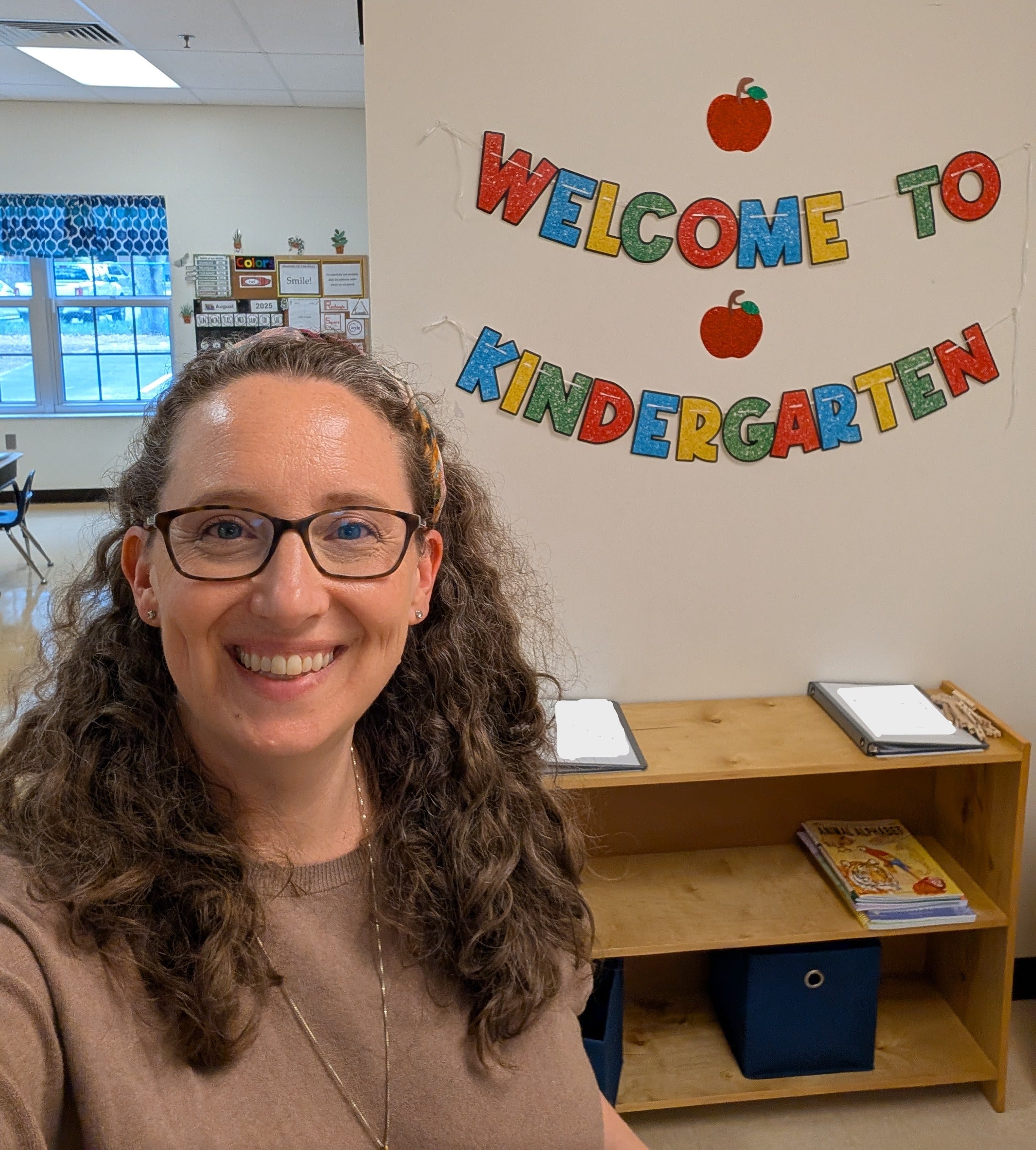
In the second half of 2020, I taught two of my children the seventy most common phonograms in the English language. In 2023 and 2024, I taught them to that Covid toddler, now a “grown-up big girl” kindergartener. Two weeks ago, I started a new job teaching kindergarten at a small Classical school committed to basic phonetic reading instruction.
I’ve gone from hating phonics to drowning in them to being a professional in them. It’s a journey that’s taken me into the mud and through my fears in order to stay on the path God laid before me.
The younger me, the teen and the young adult, would never ever have imagined the life that’s become mine to inhabit during the last five years. That young person avoided mud at all costs. She wouldn’t have believed that mud could serve such a good and holy purpose. She never imagined she’d homeschool her children or become an elementary school teacher because the tasks required fell directly into her weaknesses.
The writer of Hebrews advises disciples to “persevere in running the race that lies before us.” Sometimes that race will take us places we never wanted to go. But if it’s the race that God puts in front of us, then the only way to the other side is through it. And the other side will be different than we predicted because we will be different. We will have been through the mud.
Readings for the Twentieth Sunday in Ordinary Time (Year C) on the USCCB Website
Phonics is the best! Love how you wove it in your lesson.
Love the lesson here that as we faithfully walk through the challenges, unexpected outcomes often arrive- usually later!